Almost 7 mn face hunger in South Sudan: UN

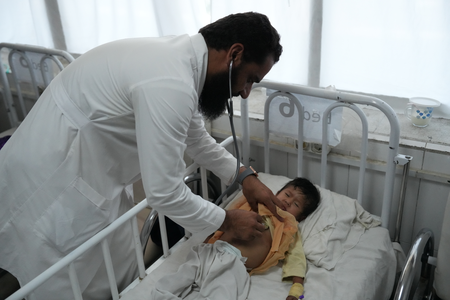
Those facing acute food shortages include some 30,000 people in Jonglei and Lakes states, in eastern and central South Sudan, the statement said, citing a new report issued by the government, FAO, UNICEF and WFP.The Unity and Upper Nile areas of Sudan are also particularly at risk, the report found.Local cereal production this year will only supply 52 per cent of the country's cereal needs, compared to 61 per cent in 2018, according to the report.The poor have been particularly vulnerable to high food prices and the limited availability of food in markets. Some 50,000 people will be facing famine between May and July, a number that could reach 260,000 without a boost to humanitarian aid is, the report warned."The projections are alarming and food security continues to worsen. Together with the people of South Sudan, we need to act urgently to reverse this trend," said Pierre Vauthier, FAO's Representative in South Sudan."Our priority is to support families to maintain and increase their production, and help agro-pastoral communities preserve their livelihoods," Vauthier added.Hunger continues to be driven by the cumulative effects of conflict, associated population displacement, depleted livestock and ongoing disruption of food production, the report said.Prolonged dry spells, flooding, crop disease and pest infestation have also severely impacted agricultural production which is largely rain-dependent.If the overall situation in South Sudan deteriorates and the population has no humanitarian assistance for an extended period, there is a real risk of famine in those areas where food is already very scarce, the report underlined.Malnutrition levels remain critical in many areas, with some 860,000 children under the age of five severely malnourished. However, there is likely to be an increase in acute malnutrition during the coming lean season in most parts of the country."As access to those in need improves due to the peace process, we have been making significant progress in treating severe malnutrition in children, with a recovery rate above 80 per cent," said Andrea Suley, UNICEF Representative in South Sudan."Yet, our nutrition programme has a funding gap of 88 per cent or $55.4 million. If funding is not timely secured, the children we know how to save may not make it," Suley warned.WFP, UNICEF and FAO along with other humanitarian organizations, have conducted massive relief operations since conflict erupted in South Sudan in late 2013, travelling usually by helicopter to reach people in isolated areas and to provide immediate, life-saving support.In 2019, FAO aims to provide 800,000 farming, fishing and agro-pastoral households in severely food insecure areas with vegetable and crop seeds, agricultural hand tools and fishing equipment, and is carrying out vaccinations and other animal health services to prevent large-scale livestock losses, the statement said.WFP is currently delivering aid to meet immediate needs and to bolster local people's resilience. WFP plans to pre-position 175,000 metric tons of food in more than 60 warehouses before the onset of the rainy season -- a move that will help save lives and make costly air drops unnecessary.The UN agency is providing South Sudan's most vulnerable with a variety of support including life-saving food and cash distributions in areas with working markets; food in return for work on the construction and rehabilitation of community assets; food for school meals; and special products to prevent and treat malnutrition among children, and pregnant or nursing women, said the statement.
--IANS/AKI
vc