Delving into the other side of Amarnath Sehgal, S.H. Raza on Partition

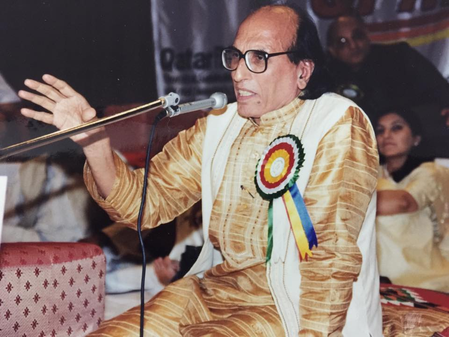
As India enters the 72nd year of its independence IANS with special permission from curator Shruti Isaac delves into the archives of Sehgal who left behind an unpublished memoir. Raza s memoir has been published but very little of it is known in India. Born in Campbellpur in what is now Pakistani Punjab Sehgal (1922-2007) was witness to the tragedy of the Partition an event he described as a "holocaust". "My nerves were shattered having witnessed the holocaust with millions killed and many more millions uprooted from their ancestral hearths and homes on both sides of the border to seek refuge solace security and peace keeping their bodies and souls together " he writes in "American Education: An Experience" sometime in the 1960s that dealt extensively with his three-year sojourn in the US from 1949. Shifting to the Kullu Valley in the wake of Partition Sehgal applied to study sculpture in the US coupled with the motive to "get out of India" he writes in the memoir explaining why the tragedy led to his search for a foreign land. "I was sad I had lost my sleep then. I wanted to be away from the environments where there were cries which were unheard " he writes. "Such were days when I wanted to jump across to unknown frontiers to live in peace and express myself " pens the sculptor who developed a deep sensitivity towards human suffering reflective in many of his works. His 1958 bronze sculpture "Cries Unheard" stems from his tragic experiences and is housed in the permanent collection of Delhi s National Gallery of Modern Art (NGMA). The 2008 Padma Bhushan awardee who returned to India in 1951 also writes about a "strange pull" that spurred him to come back to India for the second time and work for the revival of folk arts in the country s rural space. "Having lived in America for three years I had a chance to get the resident status. But the lure of my own country my home my mother provided a strange pull and motivated me to pack up and leave " he writes. The memoir now resides in Amarnath Sehgal Private Collection in Delhi a space which was formerly the sculptor s studio. On his part Raza describes Partition as "an extremely difficult time" for his family then based in Mandla (in the modern day Madhya Pradesh) in "Itinerary" (2003) originally written in French during his more than five-decade-long sojourn in the European nation. Raza (1922-2016) writes that his family was absolutely against the division of the country and all was peaceful till tensions mounted following Partition. "After the Partition there were killings in the (adjacent) region of Damoh and it became very difficult for my sister and her family. My older brother Yusuf Raza who worked as Editor of the Hindi journal Vishwamitra was well informed on what was happening." He goes to write about his family members having to vacate their homes and migrate to Pakistan. "As the tensions increased... they decided to leave their homes one night. The house was burnt; they found shelter elsewhere and finally arrived in Lahore in Pakistan " he writes. Interestingly the painter s family had to move to Mandla from Delhi after the First War of Independence in 1857 since "they knew (we) opposed British rule". The painter who was awarded the Padma Shri in 1981 the Padma Bhushan in 2007 and the Padma Vibhushan in 2013 is known for harboring a deep connect with Mandla s soil and also recollected his staying back in India. "Even though the Partition was a tragedy in my eyes I decided to stay and I never regretted staying back. I am happy to have kept my name my religion my passport and to remain an Indian citizen even after 52 years in France " Raza writes. (Siddhi Jain can be contacted at siddhi.j@ians.in)
--IANS sj/vm