Today is International women’s day and the world is talking about it. United Nation women’s wing is “United Nation Women”, an organization working for the liberalization, entity of equality and women empowerment. Spreading the hope and awareness form past 6 years, the current body is headed by Phumzile Mlambo-Ngcuka . with the mission of changing the world of women and for women, the Planet 50-50 by 2030 is the concept of women’s day.
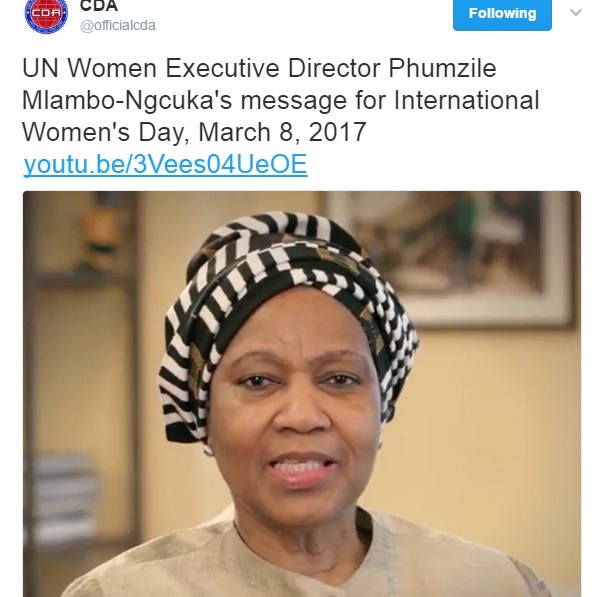
Today on the occasion of women’s day there is the message for the women across the world for the Director Desk of UN Women, to understand the women’s day better.
In her message speech the Director said, “Across the world, too many women and girls spend too many hours on household responsibilities—typically more than double the time spent by men and boys. They look after younger siblings, older family members, deal with illness in the family and manage the house. In many cases this unequal division of labour is at the expense of women’s and girls’ learning, of paid work, sports, or engagement in civic or community leadership”.
She also describes, “We want to construct a different world of work for women. As they grow up, girls must be exposed to a broad range of careers, and encouraged to make choices that lead beyond the traditional service and care options to jobs in industry, art, public service, modern agriculture and science”. Further Phumzile added, Achieving equality in the workplace will require an expansion of decent work and employment opportunities, involving governments’ targeted efforts to promote women’s participation in economic life, the support of important collectives like trade unions, and the voices of women themselves in framing solutions to overcome current barriers to women’s participation.
With the expeted to be done Phumzile concluded giving an example “a robust care economy that responds to the needs of women and gainfully employs them; equal terms and conditions for women’s paid work and unpaid work; and support for women entrepreneurs, including their access to finance and markets. Women in the informal sector also need their contributions to be acknowledged and protected. This calls for enabling addressing the injustices will take resolve and flexibility from both public and private sector employers. Incentives will be needed to recruit and retain female workers; like expanded maternity benefits for women that also support their re-entry into work. -WTN
Today on the occasion of women’s day there is the message for the women across the world for the Director Desk of UN Women, to understand the women’s day better.
In her message speech the Director said, “Across the world, too many women and girls spend too many hours on household responsibilities—typically more than double the time spent by men and boys. They look after younger siblings, older family members, deal with illness in the family and manage the house. In many cases this unequal division of labour is at the expense of women’s and girls’ learning, of paid work, sports, or engagement in civic or community leadership”.
She also describes, “We want to construct a different world of work for women. As they grow up, girls must be exposed to a broad range of careers, and encouraged to make choices that lead beyond the traditional service and care options to jobs in industry, art, public service, modern agriculture and science”. Further Phumzile added, Achieving equality in the workplace will require an expansion of decent work and employment opportunities, involving governments’ targeted efforts to promote women’s participation in economic life, the support of important collectives like trade unions, and the voices of women themselves in framing solutions to overcome current barriers to women’s participation.
With the expeted to be done Phumzile concluded giving an example “a robust care economy that responds to the needs of women and gainfully employs them; equal terms and conditions for women’s paid work and unpaid work; and support for women entrepreneurs, including their access to finance and markets. Women in the informal sector also need their contributions to be acknowledged and protected. This calls for enabling addressing the injustices will take resolve and flexibility from both public and private sector employers. Incentives will be needed to recruit and retain female workers; like expanded maternity benefits for women that also support their re-entry into work. -WTN
www.windowtonews.com