Agartala April 4 (IANS) The Northeast Frontier Railway (NFR) has to confront many unique challenges in laying tracks in the mountainous northeastern region due to its topography and the danger of natural calamities a top official has said.
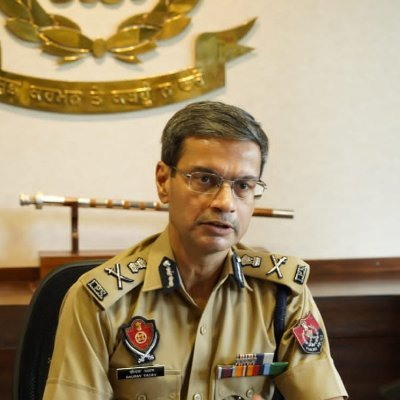
According to Commissioner of Railway Safety (CRS) Shailesh Kumar Pathak the NFR gets to work at optimum pace for only four to five months a year as the region witnesses intense rain from March to end-October with the actual monsoon running from June to September.
As the Himalayan region specially the northeastern states are siltation- and landslide-prone areas the railways have to take additional measures to deal the natural adversities. A lesser working period makes the task more challenging for railway engineers and others Pathak told IANS while on a visit here.
He said the per-kilometre cost of laying single-line tracks in the mainland states is Rs 7 crore and for double line tracks Rs 10 crore. These costs are much higher in the northeastern region due to terrain marshy land and various other hostile factors.
The CRS was in Tripura for inspecting the newly-laid 9.26 km Udaipur-Garjee section of the 114-km-long track that links Agartala with Sabroom in southern Tripura.
With Sabroom just 75 km from the Chittagong seaport in southern Bangladesh the Rs 1 150 crore project to be completed by 2019 will enable the ferrying of men and material from and to the landlocked northeastern states.
An NFR engineer said that due to the large number of rivulets and small rivers manysmall medium and big bridges besides many tunnels have to be built in the northeastern region.
He noted in this context that India s longest 11.55 km rail tunnel is now under construction as part of the 111-km-long Jiribam-Tupul-Imphal line that ends in the Manipur capital. This is longer than the the 11.2 km Pir Panjal tunnel on the Banihal-Qazigund line in Jammu and Kashmir.
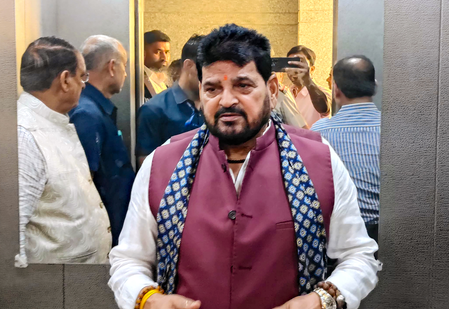
Minister of State for Railways Rajen Gohain has said there are ambitious plans to connect by 2020 all the eight capitals of the northeastern states.
In October 2008 with the extension of the metre gauge track up to Agartala through southern Assam it became the first state capital in the northeast to be brought on India s rail map after the country s independence. Subsequently the metre gauge was converted into broad gauge.
Today Assam capital Guwahati (from pre-independence times) and Arunachal Pradesh capital Itanagar are also on the rail map.
The NFR has converted all the metre gauge railway tracks into broad gauge. Metre gauge tracks have become history in northeast India Gohain said.
The last 30 km metre gauge section -- Baraigram-Dullabcherra in southern Assam s Karimganj district -- has been converted into broad gauge and passenger trains began running on this section from Friday.
As the century-old metre gauge railway track has now become history in northeast India and to display the other aspects ofIndian Railways I have a plan to build a rail museum in Nowgong (in central Assam) the minister said.
(Sujit Chakraborty can be contacted at sujit.c@ians.in)
--IANS
sc/vm/tb/vm
Railway extension in Northeast a challenge for engineers (Lead, correcting para 11)