Cygnus spacecraft leaves ISS after giving orbital boost

The unmanned Cygnus OA-9 spacecraft also known as the "S.S.J.R. Thompson" departed the ISS at 8.37 a.m. EDT (12.37 GMT) on July 15 Space.com reported on Sunday.
Before beginning its journey back to Earth the Cygnus -- built and launched by Northrop Grumman Innovation Systems (NGIS) -- provided an orbital thrust to the ISS using its powerful Delta-V engine the report noted.
"While the Cygnus was still docked at the space station s Unity module on July 10 the spacecraft fired its main engine for 50 seconds as part of a test to determine whether the cargo ship can be used to raise the space station s orbit " Frank DeMauro Vice President of Advanced Programs at NGIS was quoted as saying to Space.com.
On an average the ISS orbits Earth at an altitude of about 248 miles (400 kms). A tiny amount of atmospheric drag causes it to slow down lowering its altitude by about 1.2 miles (2 km) per month.
The ISS already has a way to boost its own orbit using on-board thrusters but "right now all the orbit raising is done by the Russian side of the space station" DeMauro said.
When the Cygnus boosted the station s orbit on July 10 it became the US s first spacecraft to raise the orbit of the ISS since the space shuttles retired in 2011 the report said.
Boosting the ISS s altitude not only keeps it from falling out of space but can also be used to help the space station stay clear of orbital debris.
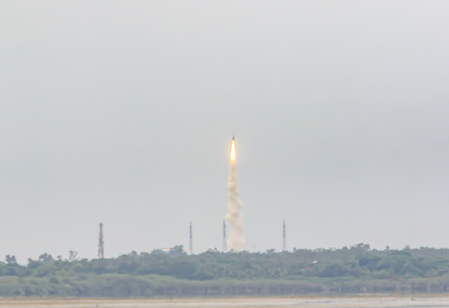
The Cygnus OA-9 spacecraft had lifted off May 21 on an Antares rocket from NASA s Wallops Flight Facility in Wallops Island Virginia.
It arrived at the ISS on May 24 with 7 385 lbs (3 350 kgs) of science experiments food clothing hardware and other supplies for the six-person crew of Expedition 55.
Currently Cygnus OA-9 will remain in low Earth orbit for the next two weeks to deploy six small satellites called cubesats using the external NanoRacks CubeSat Deployer.
After that it will deorbit and fall towards Earth burning up in the atmosphere somewhere above the Pacific Ocean the report said.
--IANS rt/mag/bg