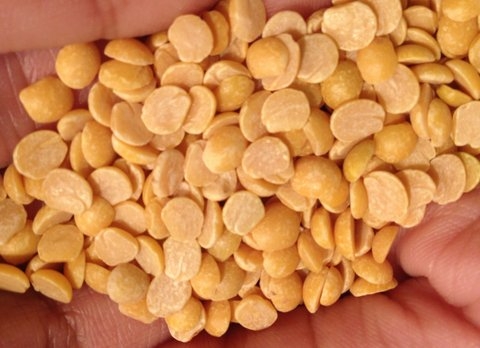
Kolkata May 24 (IANS) Decoding the Arhar dal s (pigeon pea) genome a staple legume has paved the way to correct issues of affordability production and availability of the nutrient-rich crop in India a scientist said on Wednesday.
This plant can fix nitrogen from air naturally and enrich soil fertility in a sustainable manner. The benefit is...it has more than 20 per cent protein content. It is highly nutritious for people. It is important for nutrition security. What crop can one find better than pigeonpea Visva Bharati University Vice Chancellor Swapan K. Datta also a noted crop scientist told IANS.
This crop -- Arhar or Tur dal -- can provide nutrition to the people and at the same time it can be grown in dry and low water condition. So this is a tropical crop suitable for India and for dry conditions he said.
Datta is one of the authors of a study that re-sequenced the genome or DNA of 292 pigeon pea varieties (Cajanus Cajan -- commonly called Arhar or Tur dal in India) and discovered new traits such as resistance to various diseases that affect the crop and its insensitivity to photo-period which is the duration of daylight hours required for reaching maturity.
The nine-country sequencing project was led by Hyderabad-based International Crops Research Institute for the Semi-Arid Tropics (ICRISAT) and included researchers from Visva Bharati of Santiniketan among others.
Datta said discovery of new traits would lead to the development of higher-yielding varieties of the crop.
The yield is always below one tonne per hectare. The potential yield can be between two and three tonnes per hectare. In certain areas such as Andhra Pradesh the yield can be higher he said.
Datta said the genetic breakthrough could overcome the chink in the chain related to the crop.
Affordable price production and availability...these are missing he said.
We are importing pulses (around five million tonnes) and we are spending several thousand crore. In fact before Independence or early Independence period our per capita consumption of pulses was much higher than today he explained.
In FY17 the total import of pulses increased 19.9 per cent to 5.67 million tonnes which along with 22.14 million tonnes of crop has improved the availability for the year by around 27.8 million tonnes against the average normal consumption of 24 million tonne.
Even though the government is importing pulses the price is so high. At the same time per capita availability of the pulses is lower than pre- or early post-Independence period he said.
The new study published in Genetics journal is the first to provide genetic evidence that pinpoint its domestication roots to Madhya Pradesh.
It shows that diversity has emerged from across the world although the origin of this crop is from India particularly Madhya Pradesh Datta said.
One of the breakthroughs that came from the paper shows that its photo-insensitive trait has been identified. This means high-yielding pigeon pea varieties can be cultivated much more widely... They can be grown across the country wherever there is a suitable place and wherever there is a need he said adding the discovery could also aid patent bid.
--IANS
sgh/nir/vt
Decoding Arhar dal s genetic secrets can boost yield: Expert