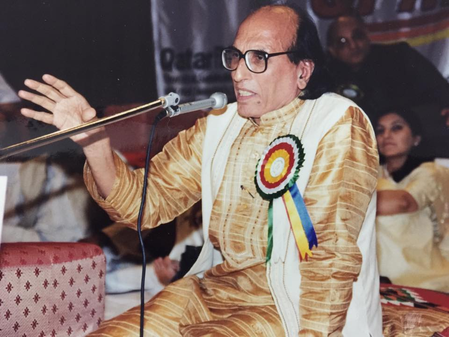
Down the memory lane: Jatin Das exhibits diverse pankha collection

Titled "Pankha: A collection of hand fans from the Indian subcontinent and beyond " the exhibition was inaugurated in the presence of noted personalities such as writer and former broadcaster Mark Tully Niti Aayog CEO Amitabh Kant and writer-poet Keki N. Daruwalla and will remain on display till June 24.
Das recalls that the journey of collecting pankhas has led him to various regions such as the Middle East Africa Egypt and far eastern countries like China Korea and Japan among others. Along the way he also sketched them and took photographs. He shared that the pankhas would be of different designs made of different materials depending on the regions where they were made.
And there are great lessons for the viewers to take home too. Consider pankhas made from palm leaves and leather or zardozi and khus for instance: Such fans are generally found in the Indian subcontinent and can easily be identified among pankhas sourced from other regions.
Ceremonial fans like chaamar or fly-whisk are made of wispy feathers or thin animal hair easily spotted at places of worship even today. ‘‘Phad fans owing to their large size stirred the air for nobility and royalty.
Das son Siddhartha himself a designer has been a witness to his father s journey of collecting pankhas. He shared that central Odisha s Alekh monks use huge palm leaf fans to keep away from the sun and rain while they use smaller ones to fan themselves.
‘‘My father as a small child in a village in Odisha remembered seeing these monks travel. They were always fascinating. Their tranquility and detachment from the world inspires respect. This is typical of what he felt about the ‘phad collection Siddhartha told IANS.
The hand fan is a recurring motif in many Indian paintings and photographs but one is also introduced to the interesting character of the ‘‘pankhawala through these prints. Often relegated to the corners a ‘‘pankhawala would stir the fan devotedly for those who employed him.
However like most craftspeople who painstakingly create these beautiful pankhas the ‘‘pankhawala seems to have been forgotten.
‘‘There are antique ceiling fans from the Mughal and Colonial period that were pulled by pankhawala from outside the room and used for large congregations in temples royal courts and aristocratic darbars and offices Das said.
The story of Abu Bakr an old craftsman practising the craft of hand fan-making in a village on the Tamil Nadu-Kerala border features in a short documentary composing the exhibition. A family completely dependent on the craft but barely being able to make ends meet.
Das feels we owe the survival of traditional crafts to "rural folk" who still make and use them.
The 76-year-old Padma Bhushan recipient while speaking to IANS expressed concern over the fact that "we do not have a sense of historicity pride dignity and heritage" and referred to the great art historian Ananda Coomaraswamy who while donating his collection found no takers in India and hence gave it to a Boston museum.
"We have become a materialistic society he said.
A striking shot from one of the documentaries places an electric fan in contrast with a traditional ceiling fan in Kerala s Fort Kochi which has now lost its practical utility to the former. Electricity may devoid hand fans of utility but even for a hand fan sold for as little as two rupees the value of the craft does not lie in its price.
Documentaries guided tours and fan-making workshops also constitute the month-long exhibition.
(Siddhi Jain can be contacted at siddhi.j@ians.in)
-- IANS
siddhi/ss/vm