Kolkata Jan 3 (IANS) In the run up to the union budget public health experts on Wednesday said inadequate central assistance poses a "constraint" to the implementation of projects for mitigation of arsenic contamination with ground water.
They added that sufficient financial support was "necessary" with the introduction of stringent standards.
Citing central government data experts said 239 million people across 153 districts in 21 states drink water that contains high levels of arsenic -- an appalling figure that needs attention.
They further added that West Bengal Bihar Jharkhand Uttar Pradesh Chhattisgarh and Assam are affected by arsenic contamination of ground water. West Bengal has the highest number of arsenic-affected people in the country.
"The centre has introduced stringent standard for arsenic level which is a welcome move. But where is the central assistance to realise the stringent target.
"The progress of projects has been slow because of financial crunch caused by decrease in central assistance and the resource crunch has crippled the implementation of programmes " Institution of Public Health Engineers (IPHE) India President and Chairman of Arsenic Task Force West Bengal K.J. Nath said.
"Adequate financial support was necessary to meet the stringent standard " he said adding that arsenic in high quantities poses significant health hazard for people and groundwater contamination is a hidden crisis.
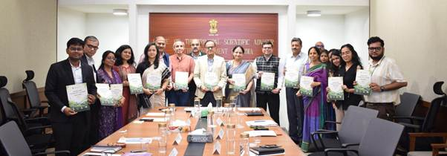
"Despite the crisis groundwater contamination either by arsenic or other pollutants like fluorides does not get the attention it deserves it can only be countered by technological solutions alternate sources of water and cooperation between various government and non-government bodies " he said on the sidelines of a consultation meet organised by IPHE and the Task Force in collaboration with Lehigh University the US.
According to Nath the situation in West Bengal is extremely serious where 12 million urban and 16 million rural populations are living in arsenic affected areas in nine districts and 112 blocks.
"In spite of years of effort by the state government and huge investment a significant portion of the population is still at risk " he said.
Highlighting the importance of adopting technologies Arup K Sengupta Professor Lehigh University in Bethlehem Pennsylvania said: "The problem of water contaminated with arsenic is a highly serious issue. To combat this problem we must look at alternative sources of water for villages and districts where the arsenic level is high. Transforming wastewater into useful water through appropriate technology could be implemented as a solution."
--IANS
bdc/qd/dg