Oceanography satellite to mark 10th year in orbit

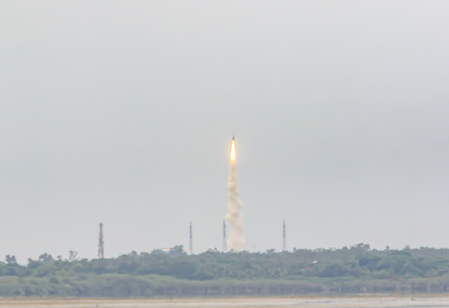
The US-European Ocean Surface Topography Mission on the Jason-2 satellite was launched in June 2008. Since then it has made more than 47 000 trips around Earth Xinhua news agency reported on Sunday.
Its work include measuring sea-level changes across the globe observing ocean currents studying climate phenomena such as El Nino and La Nina and monitoring the long-term rise in the global sea level according to NASA.
"The 10th anniversary of the launch of Jason-2 is also a landmark in the development of operational oceanography as this was the first Jason mission involving two operational agencies EUMETSAT and NOAA " Alain Ratier director-general of the European Organisation for the Exploitation of Meteorological Satellites (EUMETSAT) said in a statement on Saturday.
EUMETSAT the US National Oceanic and Atmospheric Administration (NOAA) NASA the European Space Agency and the French National Centre for Space Studies are currently working on future generations of satellite altimeters projected for launch in the next decade.
The launch of Jason-2 "paved the way for the transition from highly successful research missions to an operational altimeter system which has now turned to reality with Jason-3 Jason-CS/Sentinel-6 and Sentinel-3 providing data until 2030" Ratier said.
In January 2016 Jason-2 was joined in orbit by its follow-on mission Jason-3.
In July 2017 Jason-2 began a new mission. It was maneuvered into a slightly lower orbit from where it has been collecting data along a series of very closely spaced ground tracks just 8 kilometers apart.
Other significant results from the mission include studies of ocean circulation the ties between the ocean and the atmosphere and improved global climate forecasts and predictions.
--IANS ksk/mr