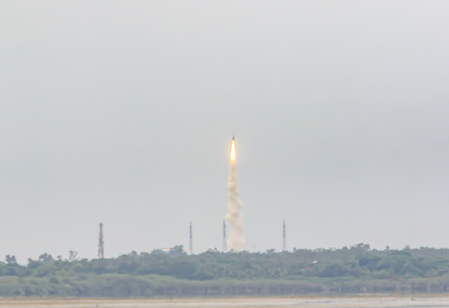
The rocket blasted off from Space Launch Complex 4E (SLC-4E) at Vandenberg Air Force Base the state of California at 12:47 p.m. PDT (1947 GMT).
The US National Aeronautics and Space Administration (NASA) s Gravity Recovery and Climate Experiment Follow-On (GRACE-FO) satellites deployed approximately 11 minutes and 30 seconds after launch Xinhua reported.
"The twin #GRACEFO satellites have deployed from the @SpaceX Falcon 9 rocket. We await our first communication from #GRACEFO via our communications station at McMurdo Antarctica " NASA tweeted after launch.
Five Iridium NEXT satellites will begin deployment about an hour after launch. The Iridium Next communications satellites that SpaceX is launching with GRACE-FO are the latest in a series for Iridium Communications to build up that company s satellite constellation.
"In 2016 there was a commercial launch that actually put government rideshare on it so we are seeing more options that commercial satellites can put government rideshare on it " said Carrie O Quinn Senior Project Engineer at the Aerospace Corporation.
"I would like to see more of it just because I d like to see the total launch cost to go down...you know...get us to space as fast as we can " she said.
Falcon 9 s first stage for the Iridium-6/GRACE-FO mission previously launched the US Air Force s classified Zuma mission in January. That mission was lost but SpaceX was not to blame for the mishap.
Although the rocket stuck a flawless landing on its last mission the California-based company does not plan to attempt to recover Falcon 9 s first stage after launch.
--IANS qd