The pink bollworm menace adds to Maharashtra cotton farmers distress

From the main road his field in a 15-20 minute walk and you can sink knee deep into the soft soil. Walking around he obsessively checks each flower and finds a number of the pests. "They are early this year " he says downcast. He has installed pheromone traps in which he finds nothing and a light trap as well.
The next day the district agricultural officers paid a visit to his farm and found that the pest attack was not serious and below the economic threshold level (ETL). "It s a healthy field " proclaimed Pramod Yadgiriwar associate director research zonal agricultural research station Dr. Punjabrao Deshmukh Krishi Vidyapeeth Akola. However Rathod is not very convinced. He is still anxious that he will lose his crop as the scientists didn t check the whole field.
Over a week later he found few pink bollworms but noticed sap-sucking pests and is now seeking advice from Yadgiriwar on how to deal with them. One of the issues with Bt cotton has been a resurgence of secondary pests the mealy bug among them.
Light traps and pheromone traps dot the cotton landscape in Yavatmal district in Vidarbha region of Maharashtra. This is the epicentre of farmer suicides in the country and in addition to the farm distress since the last few years farmers are challenged by pests like the pink bollworm (larvae of the moth Pectinophora gossypiella) on cotton which is assuming menacing proportions. This year too farmers have noticed with alarm an early onset of the pest.
The pink bollworm has not caused much trouble in India unlike the green or American bollworm (Helicoverpa armigera) which used to devastate cotton. Bt cotton a genetically modified pest resistant variety was launched to tackle the green bollworm in 2002. However last year (2017) pink bollworm damage was widespread in Maharashtra and many farmers are still waiting for the compensation announced by the government. This pest has added to the complex theatre of distress in Yavatmal.
Pesticide poisoning
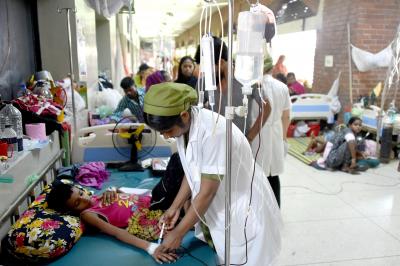
Cotton has been grown in Yavatmal for over 100 years and the cotton acreage keeps fluctuating but it is the mainstay of the local economy. Since 2002 farmers adopted Bt cotton in a big way and now they also plant herbicide tolerant Bt cotton which is as yet illegal in the country and has not been approved for planting. In 2017 the sudden increase in pests mainly the pink bollworm from July onwards prompted intensive chemical spraying which resulted in 22 deaths in Yavatmal district and over 60 overall in the state.
In the government hospital at Yavatmal alone there were 507 admissions and 13 deaths according to official figures. There were extensive crop losses due to the pink bollworm and this year the cotton area has reduced to between 3.6 million and 3.8 mha compared to 4.2 mha in 2017-18 in Maharashtra according to the Central Institute for Cotton Research (CICR).
The effects of spraying a dangerous mix of chemicals are being felt already and there have been 72 admissions in the Yavatmal government hospital till August 28 this year with five new admissions on that day. There are 22 persons in the ward with six critically ill and one on a ventilator. So far 50 have been discharged.
The doctors said the patients do not use safety kits and tend to use organophosphates and weed killers which have an impact on their body. Prompted by last year s influx the hospital dean Dr. Man Shrigiriwar has set up a special unit for inhalation and contact poisoning patients and closely monitors their progress.
Battling the pink bollworm
After last year s debacle for the first time the Punjabrao Deshmukh Krishi Vidyapeeth Akola has set up a zone-wise monitoring committee for the pink bollworm in Vidarbha this year said Yadgiriwar who heads the committee for central Vidarbha. The committees have been active in all 11 districts of the region since July and will continue their work till February of next year. There were few instances of the pink bollworm crossing the economic threshold level (ETL) he said. Only two villages in Pusad and Umerkhed talukas of Yavatmal district had reported that and now towards August end the pest was under control in those places. He advised using light traps for 2-3 hours early morning and after dusk.
The danger with light traps which are supposed to attract the small grey moths of Pectinophora gossypiella whose larvae is the pink bollworm is that they are left on all day and night. The traps attract all kinds of insects and moths killing the beneficial ones as well. CICR has advocated that light traps must be kept only next to gins to attract moths and not on fields. However this advice seems to have fallen on deaf ears.
The making of an "insecticide resistant monster"
Studies by CICR in 2015 had already established that the pink bollworm had developed resistance to the pesticide Bollgard 2. Lack of alternatives to Bt cotton which seems to have a diminishing impact on pests along with a lack of proper advice on dealing with pests has left farmers to bear the brunt of crop loss and debt.
V.N. Waghmare director (acting) CICR said since last year the pink bollworm has developed resistance but this is not uniformly distributed it is low in some places and higher in irrigated areas. Extending the cotton crop beyond December or mid-January has also contributed to increasing the pest attack. The CICR is advocating spraying neem based pesticides avoiding chemicals in the beginning and spraying synthetic pyrethroids only after 120 days.
Waghmare said the pink bollworm is a minor pest usually occurring in October and it has a life cycle of 30 to 35 days. Usually it has 1 or 2 life cycles but since the cotton lasts till April in most places its life cycle continues he pointed out.
Uncontrolled spraying of synthetic pyrethroids made the American or green bollworm an "insecticide resistant monster" as former CICR director K.R. Kranthi described it. Not having learnt any lessons we seem to be headed in a similar direction for the pink bollworm. Meanwhile the farmers suffer.
(In arrangement with Mongabay.com a source for environmental news reporting and analysis. The views expressed in the article are those of Mongabay.com. Feedback: gopi@mongabay.com)
--IANS/Mongabay
meena/vm